Gaggia MDF doser not sweeping the grounds? It is the impeller, and it is printed in Ireland
The Gaggia MDF is a grinder that outlives everything around it. The burrs and the motor go on for decades; the one thing that does not is a small star of plastic under the doser lid. When it cracks, the doser stops sweeping, the doses go uneven, and the grinder is written off for a part that costs less than the postage on a new doser. Here is how to tell, and how to fix it.
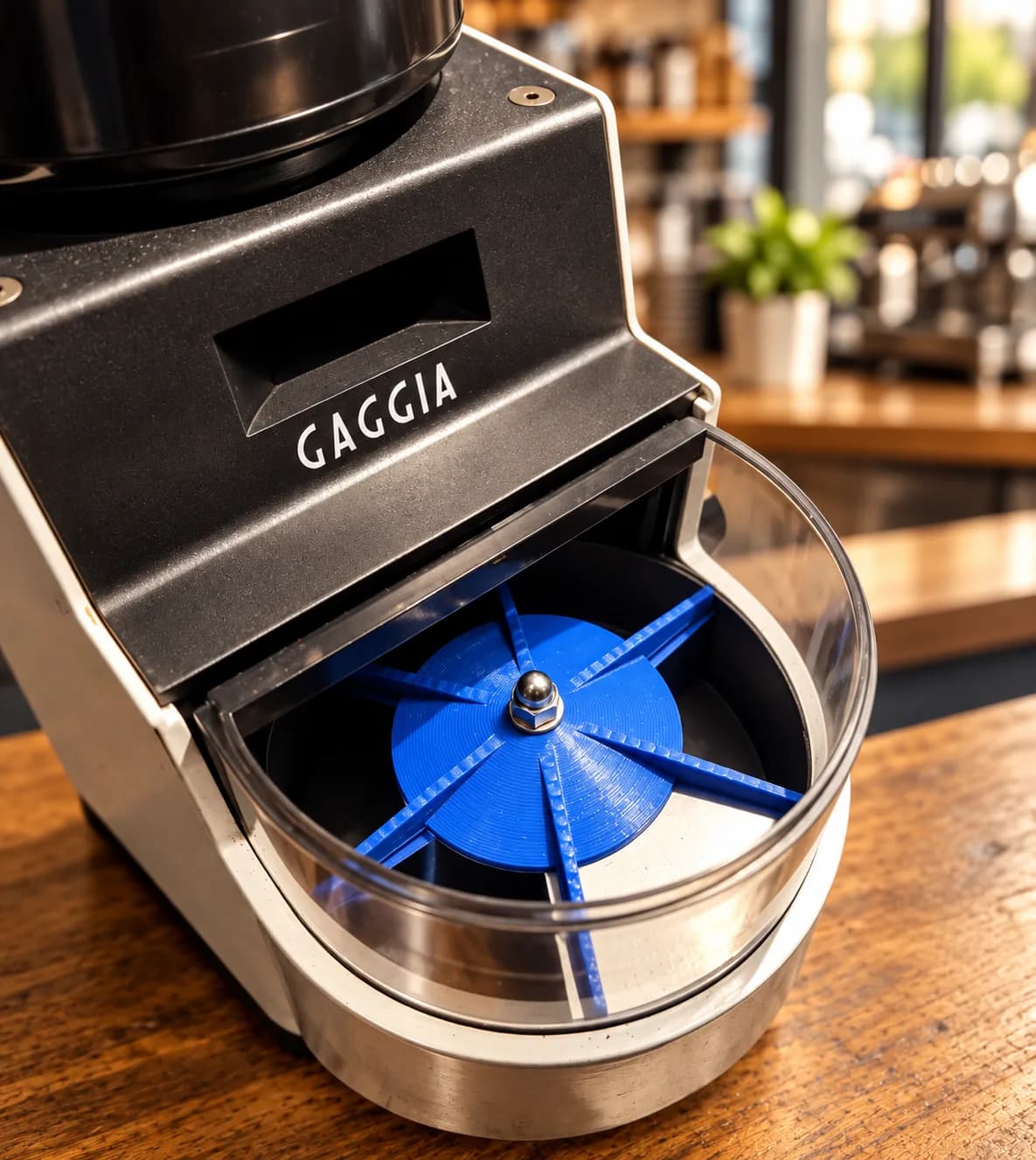
What the doser impeller does
Lift the doser lid and you will see it: a flat star of six thin vanes sitting on the central shaft, with a dome nut and a spring on top. Every pull of the dosing lever turns the star one notch, and the vanes sweep a measured dose of grounds round the chamber and out through the chute into the portafilter. The grinder fills the chamber from above; the impeller is what meters it out.
Under it is a second piece, the hub: a short cylinder with vanes of its own that keys onto the shaft and carries the sweeper. On the MDF the two are one moulding, which is why the usual replacement is the whole doser.
Signs yours has gone
- Grounds mound up on one side of the doser instead of being swept round to the chute.
- Doses come out uneven even though the grind itself is fine and the hopper is full.
- A scrape or a click from under the lid as the lever is pulled, where a broken vane catches.
- The star spins loose on the shaft, or lifts with the nut when you unscrew it.
- A piece of blue, black or white plastic turns up in the grounds. That is a vane.
Any one of these and the impeller is the first thing to check. Unplug the grinder, lift the lid, and look at the hub where the vanes meet the centre: the crack starts there, and it is easy to see once a vane has shifted.
Why the original breaks
The factory impeller is a thin moulded part, and the whole load of every dose goes through its hub. Years of warmth from the motor and the oils in roasted coffee leave the plastic brittle, and one day a pull of the lever meets a clump of grounds the vane cannot push. The hub cracks, the vane snaps, and the next pull takes the one beside it.
Gaggia does not sell the star on its own. What the parts suppliers offer is the complete doser assembly, when all that has failed is a few grams of plastic. Second-hand MDFs for parts are a lottery: the impeller in the donor is the same age and the same plastic.
The fix: a printed replacement
We print a replacement impeller for the Gaggia MDF in two parts, a hub and a sweeper top, in PETG. The hub is thicker where the original cracks. It drops in where the old one sat, keys onto the flat of the shaft the same way, and reuses the original spring and dome nut. Nothing else on the grinder changes.
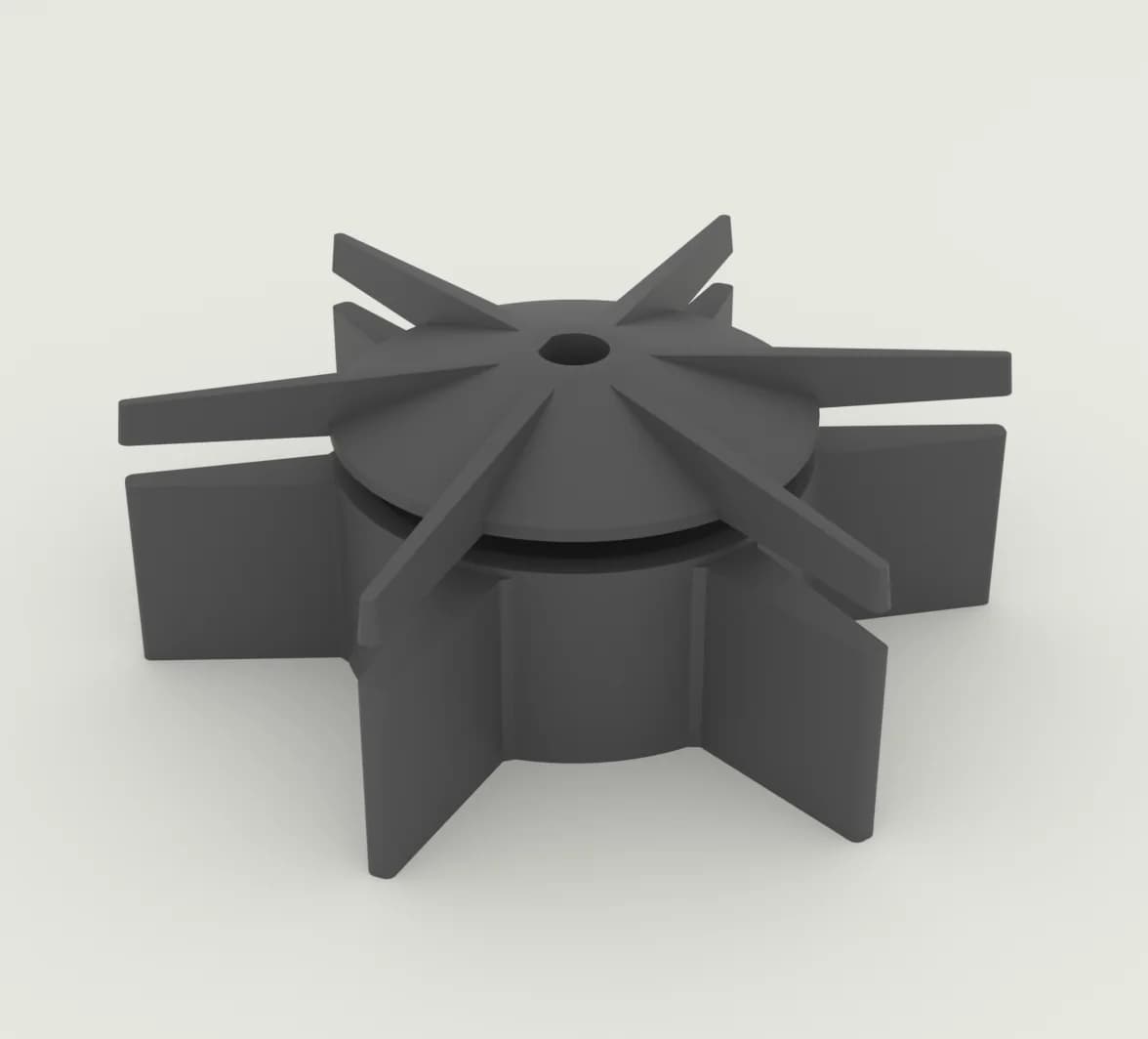
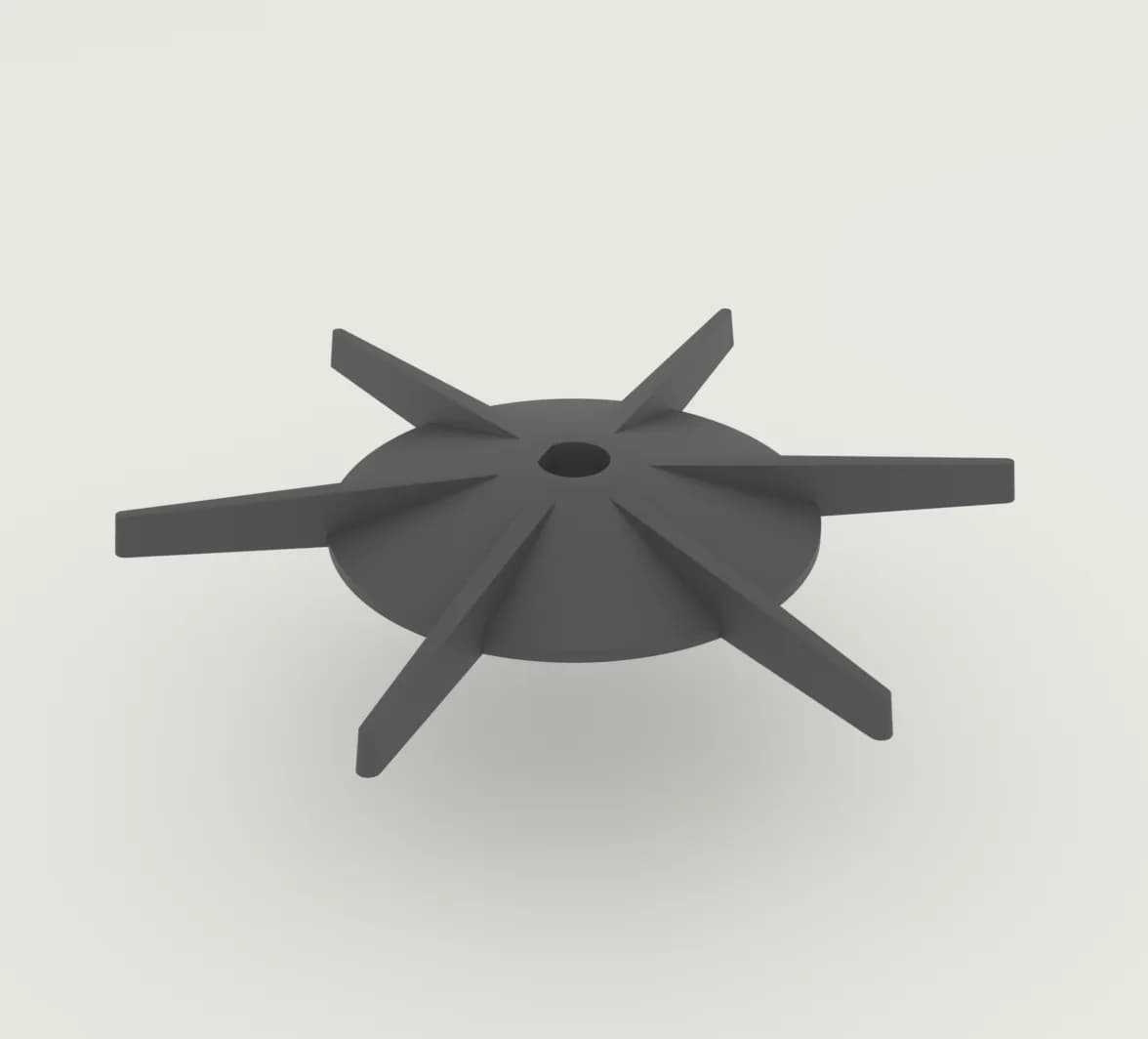
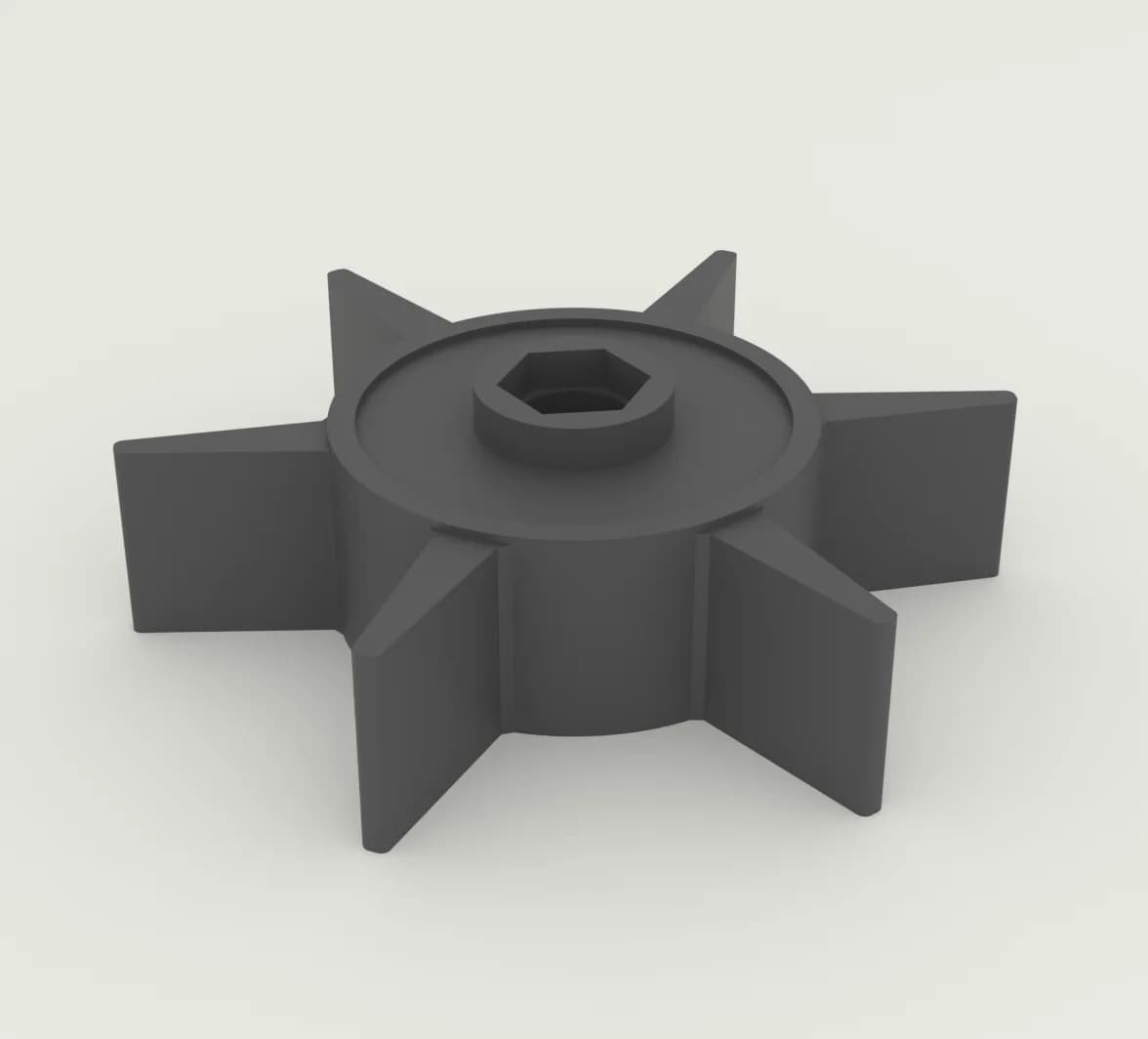
It is a third-party part, not a Gaggia one, and we are not connected to Gaggia. The design is an open one, published under a licence that permits selling prints, and the credit is on the product page.
Fitting it, in ten minutes
- Unplug the grinder and lift off the doser lid.
- Undo the dome nut on top of the doser shaft; keep the nut and the spring under it.
- Lift out the old impeller and brush the grounds out of the doser.
- Drop the new hub onto the shaft, then set the top on it so the flat in its bore lines up with the flat on the shaft, as on the original.
- Refit the spring and the dome nut, finger-tight and a quarter turn, and put the lid back. Run a dose to check the arms sweep cleanly.
The only tool is whatever fits the dome nut: a 10 mm spanner, or pliers with a cloth around the jaws. Finger-tight and a quarter turn is enough. Too tight and the spring cannot do its job.
Top only, or the full set?
Look at the hub, the lower piece. If it is sound and only the thin vanes above have broken, the top on its own is enough at €20.00, delivered in Ireland. If the hub has cracked, or it wobbles when you turn it by hand, take the full set at €27.50. When in doubt, the set: a new top on a cracked hub will not sweep straight for long.
PETG, coffee and heat
The doser sits at room temperature and only ever touches dry grounds, which is an easy life for PETG: it is the material drinks bottles are made from, it does not mind coffee oils, and it is stiffer and tougher than the PLA most hobby prints use. The part is printed in plain PETG with no paint or coating, and it washes in warm water.
Do not run the impeller through the dishwasher, and do not use it as a lever to free a jammed chute. Clear the chute first, then dose.
Questions
Will it fit my Gaggia MDF?
Yes. Every doser MDF uses the same impeller, shaft flat and dome nut, whatever the year. The part keys onto the shaft exactly as the original.
Do I need any tools?
Only something to undo the dome nut: a 10 mm spanner or pliers. No glue, no drilling.
Is PETG safe around coffee?
The impeller only touches dry grounds at room temperature. PETG is the plastic drinks bottles are made from, and the part is printed with no paint or coating.